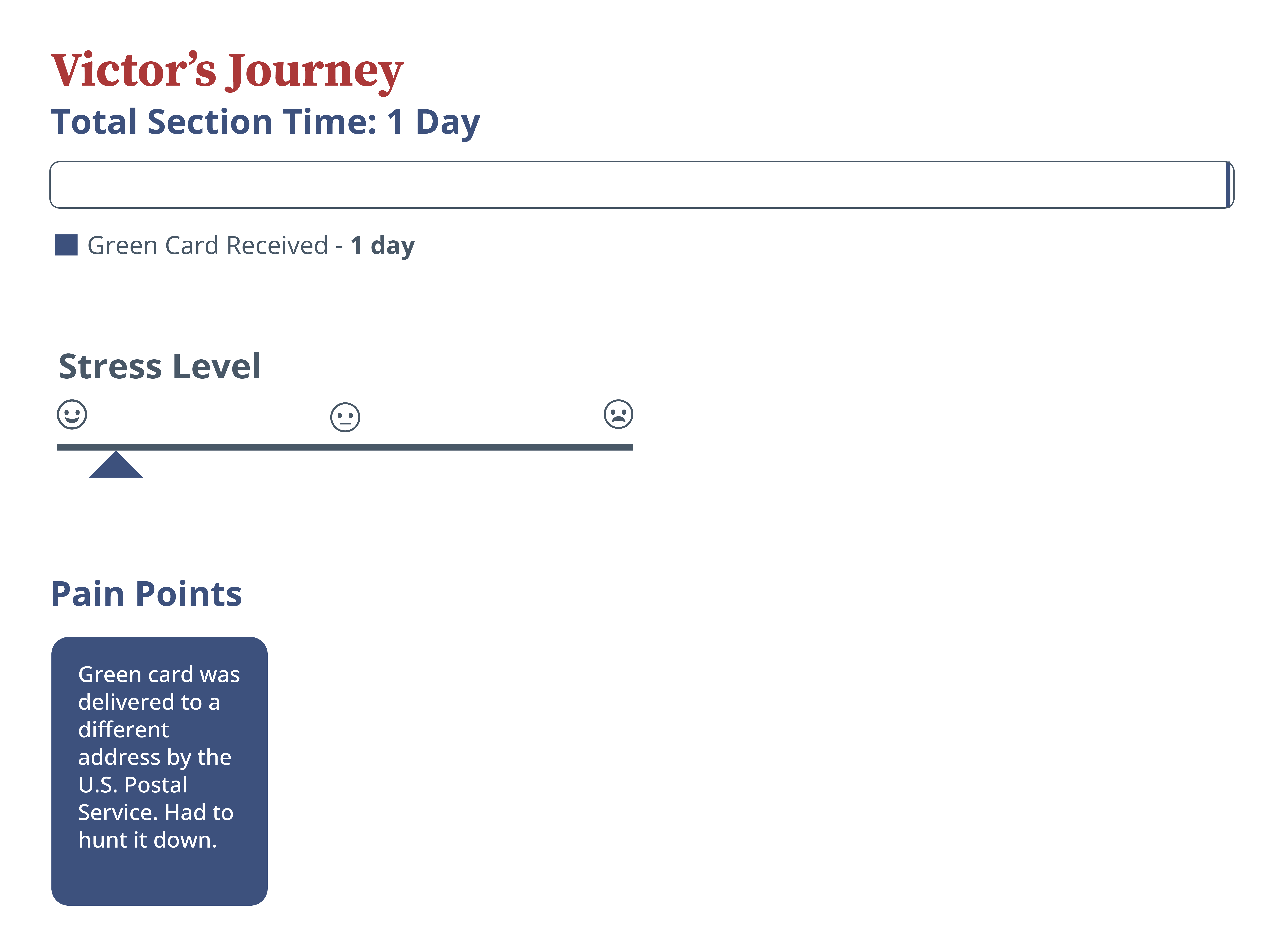
Receiving your green card is an exciting milestone! Once your application is approved, you will become a lawful permanent resident (LPR) of the United States.
Most family-based applicants receive a 10-year green card. However, if you are receiving your green card through marriage and have been married for less than two years when you become a permanent resident, you will receive a 2-year conditional green card instead.
10-Year
Most family-based green card holders receive a 10-year green card. This card proves that you are a lawful permanent resident. While the card itself expires every 10 years, your permanent resident status does not. To keep your proof of status up to date, you will generally need to renew your card before it expires by filing Form I-90, Application to Replace Permanent Resident Card.
2-Year Conditional
If you are receiving your green card through marriage and you have been married for less than two years on the day you become a lawful permanent resident, you will receive a 2-year conditional green card.
A conditional green card gives you the same rights to live and work in the United States as a person with a 10-year green card. The difference is that USCIS requires one additional step before issuing a regular 10-year card, which you will do 90 days before this one expires.
"It can take up to three weeks for it to be delivered. USCIS typically requests the card to be produced before going to approval, but that doesn't mean it is immediately produced. It can take a few days for it to be produced and shipped. You should be getting a tracking number once it is shipped."
Read the ThreadBecoming a lawful permanent resident (green card holder) gives you the right to live and work in the United States permanently. It also comes with important responsibilities. Understanding both can help you protect your status.
Jump to...
Your Rights
As a green card holder, you can generally:
- Live permanently in the United States, as long as you do not commit actions that could make you removable under immigration law.
- Work in the United States if you are qualified for the job.
- Be protected by all federal, state, and local laws.
- Own property and manage your finances.
- Attend public schools and colleges.
- Apply for U.S. citizenship if you become eligible.
Your Responsibilities
As a green card holder, you are expected to:
- Obey all federal, state, and local laws.
- File federal, state, and local income tax returns when required.
- Register with the Selective Service if you are a male between the ages of 18 and 25 and are required to do so.
- Carry proof of your permanent resident status, as required by law.
- Notify USCIS if you move by updating your address within 10 days.
For more information on your rights and responsibilities as a green card holder, you can visit the USCIS webpage:
Rights and Responsibilities"Congratulations on your new shiny green card! Here are the reminders you probably seen floating ;)
- Make a copy of front and back of your GC. It will help if you lose it.
- I recommend to start tracking your international trips. You will need it for N-400.
- If you are a male between 17 and 25, you must register for selective service (sometimes it is automatic at DMV / with USCIS, but worth checking status of registration)
- You must file AR-11 within 10 days of moving until you become a citizen (changing address online also qualifies)
- If you have social security card saying "VALID ONLY WITH DHS AUTHORIZATION", then get appointment with SSA and remove conditions on the card (wait few weeks to see if you get new card automatically)
- LPRs must file US taxes on world wide income, even when spending a lot of time overseas.
- LPRs cannot vote in federal elections. Make sure you do not register to vote or mark yourself as US citizen on I-9 and other forms. False claim to US citizenship is a deportable offense.
- You are US LPR until you naturalize, die, file I-407 or immigration judge takes away the status."
Protect Your Status
Your green card allows you to live permanently in the United States, but it is important to maintain your status.
For example, you should:
- Avoid abandoning your permanent residence by living outside the United States for long periods without proper planning.
- Follow U.S. laws and avoid criminal activity that could affect your immigration status.
- Never claim to be a U.S. citizen if you are not one.
- Renew your green card before it expires, or file to remove conditions if you have a 2-year conditional green card.
If you have questions about extended travel, criminal charges, or anything else that could affect your permanent resident status, it is a good idea to learn about the rules before taking action.
Receiving your green card is a major milestone, but for many people, it is not the last step in their immigration journey.
What comes next depends on the type of green card you received.
If you have a 10-year green card, you will simply renew your green card when it expires by filing Form I-90, Application to Replace Permanent Resident Card.
Remember, your permanent resident status does not expire when your green card expires. However, it is important to renew your green card so you always have valid proof of your status.
If you have a 2-year conditional green card, you will need to file Form I-751, Petition to Remove Conditions on Residence, before your card expires. File the petition together during the 90-day period before your conditional green card expires.
If USCIS approves your petition, you will receive a 10-year green card.
Don't Miss This Deadline
Filing Form I-751 on time is an important step in maintaining your permanent resident status.
Jump to...
When Can I Apply for Citizenship?
Many green card holders eventually choose to become U.S. citizens through a process called naturalization.
In general:
- If you are married to and living with a U.S. citizen, you may be eligible to apply for citizenship after 3 years as a lawful permanent resident, if you meet all other eligibility requirements.
- Most other lawful permanent residents may be eligible after 5 years as a lawful permanent resident.
Meeting the time requirement does not automatically make you eligible. You must also meet other requirements, such as continuous residence, physical presence, good moral character, and English and civics requirements (unless an exception applies). For more information on the naturalization process, visit the USCIS webpage here:
Citizenship InformationYour Journey Continues
Congratulations! Becoming a lawful permanent resident is a huge accomplishment. Whether your next step is renewing your green card, removing conditions, or applying for U.S. citizenship, understanding these milestones will help you stay on track and continue building your life in the United States.